How To Write A Funding Proposal For Your Small Business

How to Write a Funding Proposal for Your Small Business

A funding or “grant” proposal will have a well-defined deliverable that can be documented. The project will need to define the exact results that are requested to be funded. A grant proposal must be well-planned and presented. In a grant proposal, the requested funds are often for projects that will benefit both the government agency (mission and goals) and the organization that requested the funds. Grantees typically are looking for projects that will result in positive change and/or have a large impact on specific principles, ideals, or philosophy.

For example, the US Department of Health and Human Services (HHS) identifies a large number of types of federal grants that non-profits can apply for—one sample program is designed to reduce tobacco use and educate citizens about healthy eating. Even with these solicitations, companies submitting a high-quality small business proposal have an opportunity to be awarded a contract.

The keys to writing a grant proposal include:

  • Defining your goals, costs, and timeline.
  • Present a summary of the grant opportunity that you are proposing, and the amount of funding being requested. This could be as a cover letter or an executive summary.
  • Tie in the goals and objectives of your proposed project with the organization’s mission.
  • Differentiate your proposed project from those being proposed by your competitors.
  • Identify how the funds will be used and your methods for implementing your program.
  • Keep the content of your presentation formal as a stand-alone project where you invite the reader to participate.

This is a high-level presentation as once you have an interested grantor, then you can go into the details to describe exactly how you will accomplish every step.

In your executive summary address the following points:

  • Describe what your organization does and identify your mission and history.
  • Provide some details of the project using an attractive and descriptive name.
  • Identify the importance of the project, the problem you are solving, and why this is important.
  • Describe the results you expect to receive and how you will evaluate its success.
  • Make a case as to why your organization is the best for the project.
  • Identify how much funding you need and how you will finance ongoing work.

Company Background
Provide a clear and concise background of your company including the founding, history, mission, client base, etc.

Provide sufficient information about your infrastructure to provide confidence that you have the resources, expertise, and financial capacity to successfully carry out the contract responsibilities.

Introduce your key personnel, i.e., management, project manager, and supervisors. Include some background information and samples of successful implementations of similar projects. If available, support this with letters of recommendation, awards, licenses, and certifications.
Identify the Problem and the Solution that you are offering

Get heads nodding and showing that you understand the problem and how you can provide the solution. Identify any other solutions that have been tried, why they didn’t work, and why your innovative solution solves those issues and will result in meeting the organization’s goals. Where possible, use numbers and facts to state the problem.

Describe the urgency of implementing the solution now rather than at some time in the future. Using proven facts, compare the problem with issues that you have dealt with in the past and how you were able to solve those problems through the successful implementation of your solution. Also, discuss that your key personnel and project team who worked on those projects will also be working on this project. At the same time, keep the focus on their organization and the outcomes being sought.

Present your Primary Goals and Objectives for the Project

This step needs to be made very clear so that there is no question about your understanding of the problem and what your solution will achieve. Describe how you will measure the success of the program throughout the implementation and how their investment in the project will benefit the target stakeholders. The client’s objectives should be the outcomes you are proposing to achieve.
Your goals should be stated in general terms while the objectives should use SMART, i.e., Specific, Measurable, Attainable, Realistic, and Time-bound measures of progress.

Methodology and Strategic Approach
For a small business proposal, you must be clear in describing how you will achieve those goals. Provide specific lists of the resources you will be using/acquiring, i.e., personnel, facilities, services, and resources you will need to be able to deliver the results.
Identify the tasks and schedule you to propose to implement the project and the expected results at each stage in the process. Describe how these are cost-effective approaches to accomplishing the tasks and achieving the desired outcomes.

Evaluation Criteria
Make it clear what the evaluation criteria are and how the project will be evaluated as it moves along. Demonstrate that the investment made will be able to be measured to show the effectiveness of the project.

Funding Sources and Ongoing Progress
While the grant is there to get things moving forward, you will need to show how you will sustain the ongoing development of the program as it grows and evolves. This may include basic operations such as maintenance and support.

Presenting a 5-year plan can be extremely helpful. Your cost analysis should include standard numbers like inflation, ongoing training, growth, and the evolution of the program. When presenting a project budget, be sure to include all relevant costs including travel, supplies, marketing, and personnel as well as tangential items like insurance, utilities, and other overhead costs.
Understanding The Rfp Process

While incredibly important, the RFP process is often complex and time-consuming. It is a challenge for many, but with the right approach and resources, you can speed up the process. In this blog, we’ll offer you tools to enable you to feel more confident managing RFPs. We’ll start with understanding what they are, the roles in the RFP process, and the key steps in the process.

The RFP (Request for Proposal) process can be complex and quite challenging and time-consuming, especially for small businesses where the key personnel are all 100% occupied running the business. The RFP Firm can help speed up the process. During the proposal development process, there are several key steps. First, let us review some of the key issues:

  • Understanding what a Request for Proposal (RFP) is
  • Resources necessary during the proposal development process
  • The basic steps in the proposal process
  • Government agency’s evaluation process
  • Understanding what is an RFP

Fundamentally, an RFP is a solicitation issued by a government agency looking to purchase a product or service from a private company/contractor/vendor. The RFP is a request from vendors to submit proposals that demonstrate their qualifications, experience, and cost for fulfilling the project’s scope of work according to a specific business proposal format defined in the instructions. The government agency then evaluates each proposal submitted and usually grades and scores each relevant component. Typically, the proposal that receives the highest overall score gets awarded the contract.

Resources necessary during the proposal development process
Often, for a small business the owner, president, CEO, or other officer has the most knowledge of the business and its experience performing similar contracts and, therefore, is the most qualified to articulate and pull together the required information. They can coordinate accessing that information from other departments within their organization and discuss the best strategy for explaining how they do what they do and the best past contracts to use as examples to prove that the company has experienced similar in scope to the RFP requirements.

Proposal Writer/Consultant: The proposal consultant/writer has the responsibilities for reviewing all of the RFP documents and identifying all of the compliance requirements to ensure 100% compliance with the legalities to guarantee the proposal does not get thrown out on a technicality, outlining the content requirements for every section and subsections for each of the required proposal documents, and developing the proposal template used for capturing the content. This includes an appropriate cover page, transmittal letter, table of contents, and often a list of acronyms and compliance matrix when requested. Then incorporating and editing the required content, ensuring clear and concise copy, perfect grammar and punctuation, adding headers and sub-headers, formatting the content so that it is easy to read and looks good on the page, ensuring that statements are supported by proofs, and creating tables, charts, and callouts where necessary.

Before submitting content for any section to the proposal writer, the client team should review their content and sign off internally, thereby not having to redo the effort again and again. As the content for each section is incorporated, a draft is returned to the client to review and ensure that nothing has been misstated and any missing information is identified and requested. Then, any additional content is incorporated. Before submitting content for any section to the proposal writer, the client team should review their content and sign off internally, thereby not having to redo the effort again and again. As the content for each section is incorporated, a draft is returned to the client to review and ensure that nothing has been misstated and any missing information is identified and requested. Then, any additional content is incorporated.

The pricing portion of a proposal is always critical to ensure that you are in a competitive range. This is important as pricing that is too far outside of the median range of bidders, i.e., too high or too low, is often given a low score in the evaluation. Some RFPs are LPTA (Lowest Price Technically Acceptable) and will first rank the proposals based on price, review the lowest priced offer first, and if technically acceptable, not consider any of the others. In this case, you must provide your lowest possible pricing. The pricing portion of a proposal is always critical to ensure that you are in a competitive range. This is important as pricing that is too far outside of the median range of bidders, i.e., too high or too low, is often given a low score in the evaluation. Some RFPs are LPTA (Lowest Price Technically Acceptable) and will first rank the proposals based on price, review the lowest priced offer first, and if technically acceptable, not consider any of the others. In this case, you must provide your lowest possible pricing.
Of course, for all proposals, your pricing should be what they call “reasonable” with a modest profit. Always be sure that you will be satisfied with your pricing as there is no reason to bid on a project at too low a price where you will not be satisfied. Sometimes, you’ll need to provide a lot of details showing hourly rates, markups, overhead/G&A, profit, etc. At other times, they just ask for a flat fee.

Basic Steps in the Proposal Process

To achieve the goal of the government’s RFP, your proposal needs to provide all of the requested information in the required format with nothing left out or disregarded. One huge mistake businesses make is to just state that they will do the work, but not how they will do it, with what resources, who will do what, and what qualifications and experience your company and the proposed team have to accomplish the required tasks. Provide proof of what you say to earn the confidence of the evaluation team that you can accomplish the tasks described in the scope of work.

And, wherever possible, it is critical to differentiate your business and technical approach from the competition so that you stand out from the other vendors with a unique approach or experience, or technology.

The basic steps include:

  • Reviewing all of the RFP documents.
  • Identifying all compliance requirements (formatting, forms, attachments, etc.).
  • Identifying any key pain points or important issues gleaned from the RFP.
  • Outlining the required content for each volume.
  • Developing the narratives for each section and subsections for every volume explaining how you will address each requirement.
  • Editing the content to ensure clear and concise copy, and correct punctuation and grammar.
  • Formatting the content on every page to ensure easy readability and professional presentation.
  • Giving each proposal document a final polish, saving it in the required format, and identifying the required file names.
  • Then submitted according to the submittal instructions.

It is crucial within the narrative to emphasize how you will help the agency to overcome any crucial issues or problems that they are seeking to solve or improve. In addition, identify any additional benefits that they will receive from you as the vendor that is provided at no additional cost. Often, these are methods, technologies, or other assets that are a normal part of your operations. Describe the positive experience they will have with your company as the vendor of choice and the benefits they will receive as a result.
The information requested in an RFP can vary widely, but typically includes:

  • Technical approach
  • Management plan and key personnel qualifications/experience
  • Experience with the scope of work
  • Past performance references
  • Financial capacity
  • Pricing
  • Government agency’s evaluation process
  • Evaluate each proposal section for compliance with the RFP requirements
  • Score each main proposal section
  • Compare vendor responses
  • Calculate pricing compared with the mean

During this process, they will often create a short list of potential vendors and even request onsite presentations and/or demos where they can ask questions which also allows you to provide more detailed explanations.
It is always best to accept the government’s contract terms without exception early in your proposal as this can often disqualify you from being awarded a contract.

The Components Of A Business Proposal

Construction of your Business Proposal

A business proposal, unlike a government solicitation response, is more flexible, allowing you to present your company, its key qualifications, benefits, and expected outcome in a manner that creates a persuasive case for selecting you over the competition.
Although there are components that are always included in creating a foundation, the key strategy will be specific to the industry, client, and services for which you are bidding.

Like every other proposal, the format of business proposals requires your initial strategy to begin by capturing the client’s information and background and gaining an understanding of the problems to be solved by the services provided. The key components that establish the foundation of your proposal will include:

Company Information: Background, qualifications, key benefits that enable your company to stand out from the competition.
Experience and knowledge of the services required: Describe your understanding of the problem being solved, what the client needs, and your solution.
Technical Approach: Description of how you will render the required services, i.e., using what resources and strategies, and who does what, when, and why.
Project Cost: If necessary, break down the costs for an understanding of the pricing components and/or include a narrative.

Cover Page
Include the basic components identifying the client (name, address, and contact person), a title for the proposal that identifies the proposed services, your company information (name, address, and contact person, email, and phone), and the date.
If applicable, include an image that captures the essence of the project and projects a professional appearance for your business.
What is not helpful, are graphics throughout the proposal that are too fancy where your document looks more like a magazine than a professional proposal, so do not overdo the graphics throughout the document unless it clarifies a component of the narrative. And, do not put your content in two columns.

Transmittal Letter/Cover Letter
Provide a brief introduction to your company (years in business, specialization, etc.). Identify the experience your company has that is directly related to the contract and why you are proposing to provide the required services to the client.
Highlight the key benefits that your company brings that set you apart from the competition and will provide confidence in your ability to successfully execute all requirements on time and within budget.
Briefly identify the information provided in the proposal itself. Offer to provide any additional information or answer questions the client may have and have it signed by a senior officer along with their contact information.

Table of Contents
Include a table of contents that mirrors the proposal content with sections or tabs and sub-sections to three levels which each link to the related page. Microsoft Word will automatically create a table of contents based on your headers and sub-headers.

Executive Summary
By providing a high-level overview of the proposal, you can set the stage for what to expect in the proposal content. You can expand on some of the briefs identified in your cover letter and go into more detail.
The goal is to provide brief summaries of each section within the proposal itself under sub-headers identifying those sections and enticing the reader with the solutions covered in each of those sections.
Often, you can create the executive summary after completing the proposal or use the executive summary as your initial outline prior to developing all of the content. This second way will allow you to create an organized strategy prior to the detailed narratives.
You are not trying to explain the details in the summary, but rather highlight the key points in each of the sections of the proposal that identify the client’s problems and your solutions. Allow your executive summary to provide a high-level overview and then leave the rest of the proposal to explain the details.

Introduction
Provide your understanding of the project, its importance, and the benefits that will they will receive as a result of your services under the contract.

Description of the Project and your Technical Approach
If a specific format of the business proposal is requested, be sure to follow their format and organizational structure.
Describe in a detailed narrative how you will provide the required tasks/services, what resources you will use and who will do what, when, and how. Possibly provide a schedule of events or a Gantt chart showing over time when those tasks will be conducted.
Be specific and define clearly your aims and goals, as well as your methodology and approach. Describe the contract team containing your key personnel and their roles, responsibilities, and qualifications.

Experience/References
Provide profiles of past projects similar in scope and size with details that include the organization name, address, contact person, contract amount, period of performance, and a description of the services or tasks accomplished.

Pricing/Cost Proposal
Include your overall estimated cost for the project with descriptions of variables that could impact the cost or negotiated items with alternatives and how they will impact the overall contract amount.

The Future of Event Proposals: 2 Innovative Tactics to Boost Your Close Rates

2 Cutting-Edge Strategies to Elevate Your Event Services Proposals in 2024

In the fast-paced world of event services, standing out from the competition is more crucial than ever. We’ve analyzed the latest industry data to uncover how top event professionals are winning more business. In this post, we’ll explore two innovative, research-backed strategies that can potentially increase your proposal close rates by up to 115 percent.

The Evolution of Event Services Proposals

The events industry has undergone significant changes in recent years, adapting to new technologies, shifting client expectations, and the rise of hybrid events. To win deals in this competitive landscape, your proposals need to reflect these changes and showcase your ability to deliver exceptional, modern experiences.

Our research has identified two key elements that are helping leading event service providers capture attention and close more deals. These aren’t just trendy gimmicks – they’re scientifically supported tactics that can streamline your sales process and drive long-term success.

Remember: These strategies require upfront investment in time and resources. But for those willing to put in the effort, the payoff can be substantial.

2 Innovative Approaches to Supercharge Your Event Proposals

We’ve focused our research on the event services sector because it’s:

  • Highly visual and experiential
  • Extremely competitive
  • Constantly evolving with new technologies
  • Deeply focused on client experience

Let’s dive into the two strategies that are helping top performers in the event services industry win more business:

1. Dynamic, Interactive Pricing Options

Gone are the days of static, one-size-fits-all pricing tables. Today’s clients expect flexibility and personalization. Interactive pricing allows prospects to customize their event package in real-time, adding a new dimension to your proposals.

Our data shows that including interactive fee tables in a proposal increases the close rate by an impressive 115% for event services companies. Here’s why it’s so effective:

  • Personalization: Clients can tailor the event to their specific needs and budget.
  • Transparency: Clear pricing breakdowns build trust and reduce back-and-forth communications.
  • Engagement: The interactive element keeps prospects actively involved in the proposal process.
  • Upselling Opportunities: Clients often spend more when they can see the value of additional services or upgrades.

Implementing Interactive Pricing Effectively

To make the most of this strategy:

  1. Use intuitive, user-friendly interfaces that work seamlessly on both desktop and mobile devices.
  2. Offer a range of options, but avoid overwhelming clients with too many choices.
  3. Include clear descriptions and visual elements to showcase the value of each option.
  4. Ensure your pricing structure allows for profitability across various combinations.

Remember, the goal is to strike a balance between flexibility and simplicity. Your interactive pricing should empower clients without causing decision paralysis.

2. Rapid Proposal Delivery through Advanced Digital Asset Management

In the events industry, timing is everything. Our research indicates that in this competitive field, you have less than 24 hours to get your proposal in front of a prospect if you want to be first. But speed alone isn’t enough – your proposal must also be high-quality and tailored to the client’s needs.

This is where advanced Digital Asset Management (DAM) comes into play. By implementing a robust DAM system, top-performing event services companies can:

  • Quickly access up-to-date marketing materials, case studies, and pricing information
  • Ensure brand consistency across all proposals
  • Collaborate effectively within sales teams, even across different locations
  • Rapidly customize proposals with relevant examples and imagery

Maximizing the Impact of Your DAM System

To leverage DAM for faster, better proposals:

  1. Organize your assets logically, using consistent naming conventions and metadata.
  2. Create templates for different types of events or client industries.
  3. Regularly update your asset library with fresh content and remove outdated materials.
  4. Train your team on efficient DAM usage and best practices for rapid proposal creation.

By mastering your digital assets, you can create highly customized, visually stunning proposals in record time, giving you a significant edge over slower competitors.

The Foundation: Compelling Content and Design

While these innovative strategies can significantly boost your proposal’s effectiveness, they must be built on a foundation of compelling content and sleek design. Your proposals should:

  • Tell a story that resonates with the client’s vision and goals
  • Showcase your unique value proposition and industry expertise
  • Use high-quality visuals that bring your ideas to life
  • Be well-written, clear, and free of jargon

By combining these fundamentals with the cutting-edge strategies of interactive pricing and rapid, DAM-powered delivery, you’ll be well-positioned to create proposals that not only stand out but also significantly increase your win rates in the competitive event services industry.

As the events landscape continues to evolve, staying ahead of the curve with your proposals will be key to sustained success. Embrace these innovative approaches, and watch your close rates soar.

10 Ways To Keep Your Project Manager Happy

Project managers: the most powerful, and yet under-appreciated, person in a creative agency. Here’s how to say thank you, show some appreciation, and stay on your PM’s good side while they’re herding all those “cats”.

The most powerful person in a creative agency is the often under-appreciated project manager. Project managers are assigning creative teams, managing schedules, and basically calling the shots when it comes to who’s doing what and when it’s due. If you want to impress one person in your office, start with the project manager
Get on her good side and you’ll be laughing: she’ll assign you to the fun projects, she’ll build extra time into the schedule for you, and she may even allocate you extra hours for “creative development” in her budget (i.e. beers at lunch).

Pissing off your project manager is the last thing you want to do unless you enjoy working on only your agency’s notorious worst clients, slaving away on weekends for “last minute deadlines”, and being harrassed about your timesheets every five minutes. Your project manager can make every day a living hell or a carnival fantasyland. It’s all up to you.

Here are 10 tips for staying on your project manager’s nice list.

10. Do not start off every meeting she schedules by asking “Is this going to be a long meeting?” 

As much as it may seem like project managers enjoy sitting in meetings all day for fun, they do not. They, like you, have a lot of other shit to do. Making her feel bad about the meeting she’s scheduled is not helping your case.

9. Be on time. 

Project managers are prompt by nature and they appreciate it when you are as well. If an appointment starts at 10:00, be there at 9:50. If your deadline is 4:00, have your work submitted a little bit earlier to make sure there’s room to go wrong. If a project manager sees you as someone who is on time and reliable, he will respect that.

8. Ask for her opinion. 

Project managers are often seen as uncreative time-management Nazis, but they are so much more than walking, talking, Excel files. Project managers are involved with so many projects and clients, they often have valuable creative insights or ideas and will jump at the chance to get involved beyond creating estimates and timelines. Making her part of the creative process will earn you a gazillion PM brownie points.

7. Hang out outside the office. 

Yes, project managers also eat lunch, drink alcohol, play basketball…if you’re doing extracurriculars with your team, invite the PM. Getting to know him as someone beyond the person who bitches at you to do your timesheets every Friday will help your relationship in a huge way.

6. Give her credit. 

Let’s say your team just landed a big client or killed it at a creative presentation. If you’re recognizing the contributions of everyone on the team, for God’s sake, mention your project manager. They are the most likely to be forgotten, in spite of most likely playing a huge behind-the-scenes role in the work, and they’re also the most likely to be bitter and make you work next weekend.

5. Don’t make him hunt you down. 

Let your PM know where you’re at with your assignments. If something is going to be delayed, give him lots of heads up. Make sure he knows the status of what you’re working on. Keeping him in the loop rather than forcing him to go all Mantracker on your ass makes his job easier, which in turn makes your life happier.

4. Read your @#$@ing emails. 

Once again, she’s not sending you these emails for her own good health. Many horrendous communication disasters can be averted by people actually reading their emails. Nothing makes the project manager prickle faster than hearing “yeah, I saw your email but I didn’t open it yet.”

3. Respond to calendar invites – but NOT with maybe. 

Honestly, I don’t know why ‘maybe’ is even an option when responding to a meeting request. Just commit one way or another.

2. Don’t leave her hanging. 

Project managers are typically a little type-A by nature. They like to know details and they like to be prepared for anything. The more information you can provide her about any project, the better. If you’re worried that you may be overcommunicating, chances are you’re doing a good job.

1. Say thank you. 

Project managers know they’re annoying at times and all that management can make him feel like a nagging mother-in-law. Just a simple ‘’thank you’ or a note of appreciation can make him feel like he doesn’t exist solely to rain on your parade. Thank him for setting up a presentation, sending around a meeting recap, or sourcing a new screen printer… say a genuine thank you from time to time. Then sit back and watch all the fun projects roll your way.


Creating Faster Proposals: A Comprehensive Guide

Creating Faster Proposals: A Comprehensive Guide

Proposals that reach clients quickly tend to close faster, so you don’t have any time to waste. You need to get that proposal out before your big deal moves on to your competition. Here’s how to streamline your proposal process and get your offers out the door more efficiently.

The Proposal Paradox

Most businesses have a love/hate relationship with proposals. On one hand, proposals bring clients, work, and money into your business. Without proposals, you have nothing. Winning proposals is exhilarating.

However, creating proposals can be an entirely different beast. It’s often extremely time-consuming – writing, designing, pricing, proofing, and finally getting the thing out the door and into the hands of your sales lead. By that theny might have gone cold in the days or weeks it’s taken you to get back to them. The creation process can be painful, but it’s a necessary step in closing deals.

But here’s the thing: proposals that get to clients close faster. You don’t have time to waste. You need to get that proposal out before your big deal moves on to your competition.

How Can You Create Proposals Faster?

1. Know What You’re Selling Before You Sell It

Make sure you know exactly what you’re going to propose before you start working on your business proposal. You should already clearly understand what your sales lead needs and what your solution is before you type a single word.

Many people make the mistake of developing their strategy as they write the proposal, which is incredibly inefficient. It increases the amount of time you spend writing because you’re busy thinking and strategizing.

Your services should already be set and easily articulated; you shouldn’t have to reinvent the wheel for every proposal. Whether you sell digital marketing services, architectural design, or solar panels, you know what you offer, and, if you’ve done your homework, you know what your client needs. Put the two together.

This isn’t the time to let the ingredients simmer on the stove – this is the time to plate the food and serve it up.

2. Use Online Proposal Software, Period

If you want to create proposals faster, you must use some type of online proposal software. It’s designed to streamline your whole proposal process. From writing to design to sending and tracking, online proposal software unites all your separate tools and steps under one efficient roof. No more juggling Word docs, Google docs, InDesign files, Excel spreadsheets, and PowerPoint slides.

Here are several ways that online proposal software can help you create proposals faster:

a) Business Proposal Templates

Most proposal software products offer templates as part of your subscription. These templates are professionally written and designed to help kickstart your proposal process.

Often, writing a proposal can be the most time-consuming part of the whole process, and writer’s block can plague even the most seasoned writer. With a template, the provided sample text can unlock your ideas and provide a guideline for what you might want to express in your proposal.

Don’t worry that you might submit the same proposal as your competition – most proposal templates are customizable so you can tailor them to your specific service, brand, and client project. The template just gives you a running start.

The same goes for proposal design. Templates have already been designed, so you don’t have to wait for a designer to be free or hire a freelance designer who could take even more time (not to mention money). Good online proposal software makes it easy to swap images, change fonts, and add color, without needing a professional graphic designer.

Templates often cover a variety of services and industries, so before choosing online proposal software, have a look at their selection. But if they allow customization, you can choose any template you want and fine-tune it to quickly create your winning proposal.

b) Content Library

During proposal writing, one of the most frustrating and time-consuming parts of the process is pulling together the content.

Maybe you wrote a great description of your branding services for your last proposal – or was it the one before that? But now no one knows where it is. Is it on your computer? Is it on someone else’s computer? Is this even the final version that was used in the proposal? And how about the description of your digital marketing services? You think that was in a proposal from a few months ago. Can’t find it? Guess you’ll have to start from scratch.

Good online proposal software offers some type of content library where you can store all of your different proposal sections in one place so anyone on your team can access them at any time.

No more hunting for team bios, the ‘About Us’ description, case studies, or fee tables. Much of what you’re selling to potential clients is repeated from proposal to proposal, so why recreate it every time? Yes, you’ll need to customize some things to fit the particular needs of a client, but that takes far less time than going back to the drawing board to rewrite every proposal section every time you have a new proposal to create.

To maximize the time-saving benefits of a content library, you’ll need to do some work upfront to create the sections and input them into the library, so they’re easy to find. But, once they’re in there, you can drag and drop each section into your proposal where you need them, significantly reducing the time it takes to write a proposal.

c) Online Proposal Views

Can we all agree that snail mail is great for birthday cards, but it’s not so great for closing deals quickly?

If you’re printing proposals, assembling them, and then dropping them into the mail, you’re adding days – or maybe even weeks if something goes awry with your printer or the postal service – before your clients receive anything. And every day they don’t have a proposal from you is one more day they could receive a proposal from your competition.

Even emailing a PDF can be troublesome as large attachments get caught in spam, so the client doesn’t even see your proposal, or something goes wrong with the file and they can’t open it.

With online proposal software, you email your client a customized link to view their proposal online on any device, at any time. It arrives quickly, with no issues, and looks professional. There’s no faster way to get your proposal in front of your client.

d) Online Signatures and Payments

You want to get a proposal to your client quickly, but it doesn’t end there. What you want is to close this deal quickly, and to do that, you need to make it easy for your client to say ‘YES’ right away.

Adding online signature buttons to your proposal can help get significantly faster approval. Good online proposal software products have an online signature tool that lets clients sign your proposal right in the browser and makes the contract legally binding.

Even better is the ability to add an online payment request to your proposal, so you get paid as soon as your client signs off.

e) Proposal Metrics

While online proposal software helps you create and deliver proposals faster, some products go a step further by providing metrics to keep you informed of everything that’s happening with your proposals.

Proposal metrics let you see when your client opened the proposal, which sections they spent the most time viewing and how long they looked at it, along with close rates broken down across teams and individuals so you can track success.

All of this information gives you insight into what’s working and what isn’t so you can improve your approach for your next proposal, making it easier and faster to create a winning proposal.

3. Practice Makes Perfect Proposals

Overall, if you want to improve the time it takes to create a proposal, you need a system and you need to stick to it. That includes online proposal software, but even the best tools are worthless if you don’t use them consistently or correctly.

Be as prepared as possible before you start so you can snap all the pieces together instead of wasting time creating the pieces as you go. Look for as many ways to eliminate redundancies and inefficiencies as possible.

The more proposals you create, the easier and faster it will get over time. But be sure to learn from each proposal – if it won, why did it win so you can repeat the same formula? If your proposal didn’t win, find out why so you don’t repeat the same mistakes.

The Importance of Speed

And one last piece of proposal advice: don’t procrastinate. Remember, every moment you waste getting a proposal to your client is an opportunity for your competition to get ahead of you.

By implementing these strategies and consistently refining your process, you’ll be able to create winning proposals more quickly and efficiently, giving your business a competitive edge in the market. Speed, combined with quality, can make all the difference in closing deals and growing your business.

How To Write A Proposal: Data-backed Best Practices For 2024

Business proposals are sometimes perceived as a necessary evil in sales. Whether you’re writing a proposal for a huge new contract or simply pitching to a potential lead, writing sales proposals can be daunting. After all: with how hard you’ve worked to get the potential customer to this part of the process, a lot rides on your ability to get them to cross the finish line. What if we told you that writing a smart, data-informed business proposal could be the highlight of your sales process that also helps you to close more deals and increase revenue?

The purpose of this guide is to provide a clear set of rules when it comes to how to draft, format, and implement a successful, stress-free sales proposal. We’ll take a deep-dive into the elements that need to be included, why these elements are essential for success, and how to effectively structure your proposal so that it’s easy for your customers to understand their problem, your proposed solution, and make them eager to start doing business with you.

What is a business proposal? A business proposal is an offer from a seller to a prospective customer. It’s a document that outlines the scope of work, costs and deliverables for a project. Unlike estimates and invoices, business proposals are written before any work has started and are used to win new clients. Business proposals can vary; however, there’s one thing in common: their purpose is to convince potential customers to buy your products or services.

Business Proposal – Marketing Template Example They can be grouped into two categories:

  • Solicited proposals: This is also known as an RFP (Request for Proposal). It’s sent in response to a request from an existing customer or when contacting a company you already know. This type of proposal is based on the specifications provided by the client and must include all the information they have requested.
  • Unsolicited proposals: Unsolicited proposals are sent to companies you don’t have an established relationship with. This type of proposal is more like a sales pitch as you don’t have any specifications to follow. In this case, you need to include as much information about your products or services as possible for your potential clients to assess whether you’re the right fit for them.

Why putting time and effort into your business proposal will pay off If you’ve just landed a new prospect, you’re likely both excited about the opportunity and want to move forward. A well-crafted business proposal is a step toward landing the deal. A poorly crafted one, on the other hand, might give them a reason to take their business elsewhere.

The hardest part of writing a business proposal is making a compelling argument for your work. You need to show that:

  • you clearly understand the client’s needs
  • you have the right skills and experience to undertake the project
  • your ideas are original and fresh
  • you have the willpower and determination to follow through on your promises
  • you have personality! (Nobody’s here for the boring business stuff)

With the world’s information always quick search away, clients want to know why you’re the absolute best solution to their problems, and that you’re going to be worth investing in.

To ensure that you’re always sending out top-quality proposals that will win over clients, use these data-backed best practices for writing business proposals in 2024.

Best Practices:

What Should a Project Proposal Include? A proposal’s structure and flow is like that of a story: it has a beginning, a middle and an end. Just like a good narrative, it is organized and tells a convincing story designed to captivate clients. Most proposals follow similar patterns, but every proposal will be different depending on the company, industry, deal size, and the product or service in question.

The following sections detail the sections typically found in business proposals as well as explain how to include them.

  1. Cover Page It’s hard to judge a book by its cover, but you can guess how well it will sell. A sales proposal cover page that is clean and informative, including the client’s name, your name and contact info, and the date submitted, is key to gaining and keeping a client’s attention. Consider including a table of contents to make it easy for the client to jump to the area they need to review.
  2. Executive Summary The executive summary isn’t a brief rehashing of the whole proposal, it is a highlight of the most important elements of your business proposal. The goal is to show the client that you understand their background information, business plan and unique challenges–and that you are just the one to solve them. Pique their interest and give them a reason to continue reading. For inspiration in writing your executive summary, take a look at these three executive summary examples you can steal.
  3. Approach/Solution How do you solve your prospects’ problems better than your competitors? How can your company solve customers’ pain in ways that are unique and compelling to your reader? The key to successful proposal writing is to outline how you provide solutions and make yourself a winning choice.
  4. About Us/Our Team Introduce your leadership team, company founders, and team members who will be working with your new clients on their projects. Better yet, show how the members of your team have had success handling similar situations in the past. The goal of this section is to give your client confidence that they will be working with a competent, professional team and minimize any doubts they might have about hiring you. Pro Tip: in marketing, it’s well known that including real, human photos increases trust with a customer and as a result, higher conversion rates. Apply this insight to your about us/our team section to create a memorable impression with your reader.

Business Proposal – About Us Example

  1. Deliverables The deliverables section of a business proposal is probably the most important section because it outlines exactly what will be delivered for the client. It’s important to always include this section in your business proposals, as it gives the prospect a clear picture of what you are going to do and how you are going to do it.

The deliverables section should outline details like:

  • The scope of the project includes recommendations based on research and analysis.
  • What you will provide (content, design, strategy, etc.)
  • How you will provide it (online, onsite, etc.)
  • When you will provide it (timeline)
  • Who will be responsible for what tasks and when they will be performed?
  1. Pricing Aim to keep your pricing section succinct and straightforward. Explain how much their total investment is going to cost. List and describe all the project fees, taxes, discounts, and optional extras. If your client has any confusion or concern about hidden extra fees, they’ll be more likely to trust you less — leading to a higher chance of rejection.

Highlight any additional costs that may arise during the project lifecycle. Clients tend to be sensitive about extra costs that weren’t mentioned in the proposal. The more transparent you are with them, the more likely it is they will trust you and be willing to pay those additional costs if they crop up later on in the project. Make sure this is crystal clear in your business proposal price section so there’s no confusion about what’s included and what’s not included in your pricing

  • Pro Tip: Instead of referring to your prices as fees or charges, label your pricing section Your Investment. This will remind people they’re investing in their development and that of their team and organization.
  1. Terms and Conditions/Sign Off If you’ve gotten this far, you’re on the home stretch. The closing of a business proposal should be the easiest part of creating it. You already did the hard work in the beginning and throughout, so it’s time to wind down and push things over the finish line.

A clean, well-designed page is a great way to close out your proposal with confidence. Just make sure that you include all the necessary information: a place for your new client to design, clear, up-to-date terms and conditions, and any other last-minute details they may need to review before making your partnership official.

  1. Bonus: Case Studies A case study is an in-depth look at a single example of a success story. It’s typically used to demonstrate how your offering has helped a customer overcome a key challenge they’ve been facing, and how it’s delivered tangible results as a result.

Case studies and testimonials are particularly useful in the closing stages of the deal cycle when buyers are trying to determine whether or not a proposed solution is right for them. Social proof from a client who’s experienced success with your solution can go a long way in helping get your buyer over the line.

How Should A Business Proposal Look?

Given the high stakes of winning new business, you can’t afford to have a bad-looking proposal. You’ve got to make it look good and fast.

Too many people focus on the content and forget about the design. The truth is both are equally important to the success of your proposal.

If you’re not designing, you’re losing out.

A well-designed proposal with engaging, high-quality images, graphics and video stands out from the competition and quickly communicates value to decision-makers. Business proposals that stand out close deals.

Proposals with images close at a higher rate Data shows that proposals that include images perform significantly better than those without. Project proposals that contained images were 72% more likely to close, and they did so at a 20% faster rate.

If you’re looking for a way to make your proposals shine, adding images can be a real game-changer. They can help catch the attention of your prospect, while also allowing your company to show off its expertise and communicate ideas more effectively.

But which images should you include? Here are some suggestions:

Headshots of your team members: If you’re offering services, it helps to let the prospect know who they’ll be working with. It also helps build trust — if they know who you are and can put faces to names, they’ll feel like they have an established relationship with you by the time they open the proposal.

Product shots to show off what you sell: If you’re offering a specific product or service, including photos gives the prospect a better idea of what it entails. Product shots are particularly useful if you’re selling through an online marketplace such as Amazon or Etsy, because customers will already be used to seeing them there.

Images that illustrate your services in action: For example, if you were pitching for a window cleaning job, showing images of past projects would serve as case studies that would help show off your skills and convince the prospect that you could create something similar for them.

Window washing services in action

Adding video to proposals increases close rates Rather than just talking about how a proposal was constructed, proposal videos can show the reasoning behind their pricing. This makes the close much more effective and greatly helps to close deals.

When your client shares your proposal internally, video makes it easy to have conversations where your voice is always present. Your client will love you because you’re explaining the deal yourself. Decision makers and buying committees will love you because you can demonstrate how you’ll solve their problem in 5 minutes, asynchronously, instead of 30 minutes over a scheduled call.

Data shows that while the use of proposal video is increasing year over year, still only a minority of proposals (21%) contained video in 2023. As companies search for creative ways to engage potential buyers, you can capitalize on this strategy now to help your deals stand out.

For inspiration, check out these examples of winning proposal design.

Using Language Models (LLMs) in the Proposal Process

Large Language Models like GPT-3 can be valuable tools to assist in the proposal writing process. Some ways LLMs can help:

  • Generating initial drafts or outlines of proposal sections based on project details and client information
  • Brainstorming and fleshing out solution approaches, deliverables, and value propositions
  • Assisting with word choice, phrasing, and tone to make the proposal compelling and persuasive
  • Proofreading and editing for grammar, clarity and flow
  • Answering questions and providing relevant information during the proposal development

LLMs can help streamline the proposal writing process by automating first drafts and editing. However, humans should always carefully review the generated text to ensure accuracy, brand consistency, and a personalized approach tailored to each client. LLMs are powerful assistants in proposal writing but shouldn’t fully replace the human expertise and client knowledge that an experienced salesperson brings.

Sales Proposal Follow-Up The best way to follow up with leads is to use data, not guesswork.

Professional persistence is an important element of good salesmanship—and when done right it can go a long way. A cautious approach, a smart strategy, not to mention personal reliability will pay off.

How you follow up after sending a proposal is just as important as the proposal itself, and the timing of your follow-up can be the deciding factor in getting a deal closed, so it’s important to know when is best to reach out.

You’re more likely to succeed when you reach out with important information based on your prospect’s behaviour. For example, if you know that prospects open a proposal an average of five times before they make a decision, build high-importance tasks into your process for reps to follow up on the proposal as soon as it has been opened for a fifth time.

Business Proposal – Client Insights

To effectively use your follow-up process, you need to know the baseline metrics of your team. Once you know these numbers, you can identify patterns that indicate a deal may be in trouble and act before you miss your opportunity.

Ready to get started but need some inspiration? There are many free business proposal templates available online that include everything you need to dominate your brand pitches and win more clients. Templates are available for a wide range of businesses from accounting firms and creative agencies to construction jobs. Searching for “[your industry] business proposal template” is a good place to start.

Business Proposal – Roofing Template

A winning business proposal has a greater chance of success and can be the difference between getting that client, making that sale, or missing out on that opportunity. To get your proposal noticed in a sea of competitors, you need to work at creating a document that is easy and enjoyable to read.

Our best tip? Keep it short, but don’t hesitate to include details in the most relevant sections.

Long story, short: create the proposal that you would be thrilled to get.

7 Business Proposal Writing Tips to Better Convey Your Message

As a salesperson, your ability to communicate effectively is critical to winning over prospects. While it might feel natural to showcase your expertise and knowledge, sales aren’t made by simply proving how smart you are. Overusing jargon or complex technical language can often have the opposite effect, confusing your prospects rather than impressing them.

Plain language writing, often referred to as plain English, is about writing clearly and concisely so your audience can easily understand what you’re trying to convey. When it comes to business proposals, plain language involves stripping away ambiguity, confusing language, and unnecessary jargon.

Using plain language makes your proposal easier to understand, more memorable, and ultimately easier for the buyer to say “yes.” Here are seven essential tips for incorporating plain language into your proposal writing:

Plain Language Proposal Writing Tips

  1. Use Simple, Concrete Terms Instead of Abstract Ones
    We’ve all heard the saying, “Less is more.” Keeping your proposal writing straightforward increases the likelihood that your prospects will grasp your key points. While technical terms and industry-specific language are sometimes necessary, try to limit their use unless you’re certain the reader is familiar with them.

    If you must use complex terminology, always explain it. The goal is clarity, especially when your audience may not be experts in your field.

  2. Use Positive Words Instead of Negative Ones
    Positivity promotes clarity and boosts engagement. Even if you’re conveying the same idea, the way you frame it matters.

    For example, instead of saying, “There’s no reason we shouldn’t do this project,” say, “We need to do this project!” The positive phrasing makes your enthusiasm clear and eliminates room for misinterpretation.

  3. Use Simple Connectors Instead of Wordy Phrases
    Connecting words are necessary, but overusing them can complicate your message. Simplify your language by choosing straightforward phrases.

    Instead of writing, “For the purpose of this project, and in the event it is determined we require more information, we will assume the role of your customer and conduct an audit of your website,” try:
    “If we need more information, we will conduct an audit of your website from the perspective of your customer.”

  4. Use Active Verbs Instead of Passive Ones
    The active voice is direct, clear, and leaves no room for ambiguity. Readers prefer it because it feels natural and ensures clarity about who is performing the action.

    Compare:

    • Passive: “An online campaign was developed that resulted in 400 new monthly subscribers.”

    • Active: “Our team developed an online campaign that brought in 400 new monthly subscribers.”

    The active voice emphasizes your achievements and clarifies responsibility, which is particularly important when defining roles and deliverables.

  5. Use Precise Verbs Instead of Abstract Nouns
    Verbs are meant to convey action. Allow them to do their job by choosing clear, specific words.

    Instead of saying, “Our strategy will make an improvement on your sales performance,” simplify to:
    “Our strategy will improve your sales performance.”

    It’s shorter, more confident, and leaves no doubt about the intended outcome.

  6. Use Short, Everyday Words Instead of Long, Academic Ones
    If you attempt to sound too sophisticated, you risk alienating your audience. People connect best with language they can relate to.

    Compare:

    • Overly Complex: “Our solution streamlines all facets of the operational ecosystem to facilitate seamless collaboration and enhance customer satisfaction.”

    • Plain Language: “Our solution helps your team collaborate effectively and improve customer satisfaction.”

    Straightforward language is not only easier to understand but also feels more authentic.

  7. Use Concise Sentences with One Main Idea
    Overloading a sentence with multiple ideas can be confusing and may cause your message to get lost. Break complex thoughts into simpler, shorter sentences.

    Instead of:
    “Our company offers a full range of marketing services, including content creation, SEO, social media management, and email marketing, all designed to help you reach your audience more effectively.”

    Try:
    “We offer a full range of marketing services, including content creation, SEO, social media management, and email marketing. Our goal is to help you reach your audience more effectively.”

Final Thoughts

The language you use in your proposal has a bigger impact than you might think. By prioritizing clarity and simplicity, you increase your chances of connecting with your prospects and guiding them toward a positive decision.

Proper tone and style can certainly help tailor your message, but clear, direct language is what truly makes your proposal compelling. If your prospects can’t easily understand your message, they won’t be persuaded by it.

Remember, when you have a promising prospect in the pipeline, following these principles can be the difference between winning them over or losing them to someone else with a clearer, more persuasive proposal.

Crush Your Sales Goals with These 6 Best Web Services Proposal Templates

In contrast to other industries, those involved in digital design are well aware of the importance of a compelling and expertly-designed business proposal. A proposal, other than personal presentations, is the best way for business owners to convey the appropriate solution to a client’s demands or pain areas. Proposals demonstrate your understanding of the client’s requirements and your suitability for the job. In fact, most customers normally ask for this document before asking to review the project portfolio.

Your web design proposals, as a website designer or developer, must have eye-catching designs and layouts. However, due to scheduling restrictions, it might not be possible. For that reason, we’ve prepared this list, so you can choose your preferred web design proposal template and start winning more business!

But before you proceed, there are a few things to keep in mind when using templates for web design proposals. First, make sure that the template you choose is appropriate for the project you’re working on. Second, customize the template to fit your own needs and style. Third, don’t be afraid to add your own flare to make the proposal stand out.

Now let’s get into the list.

6 Best Web Services Proposal Templates

Website Design Proposal Template

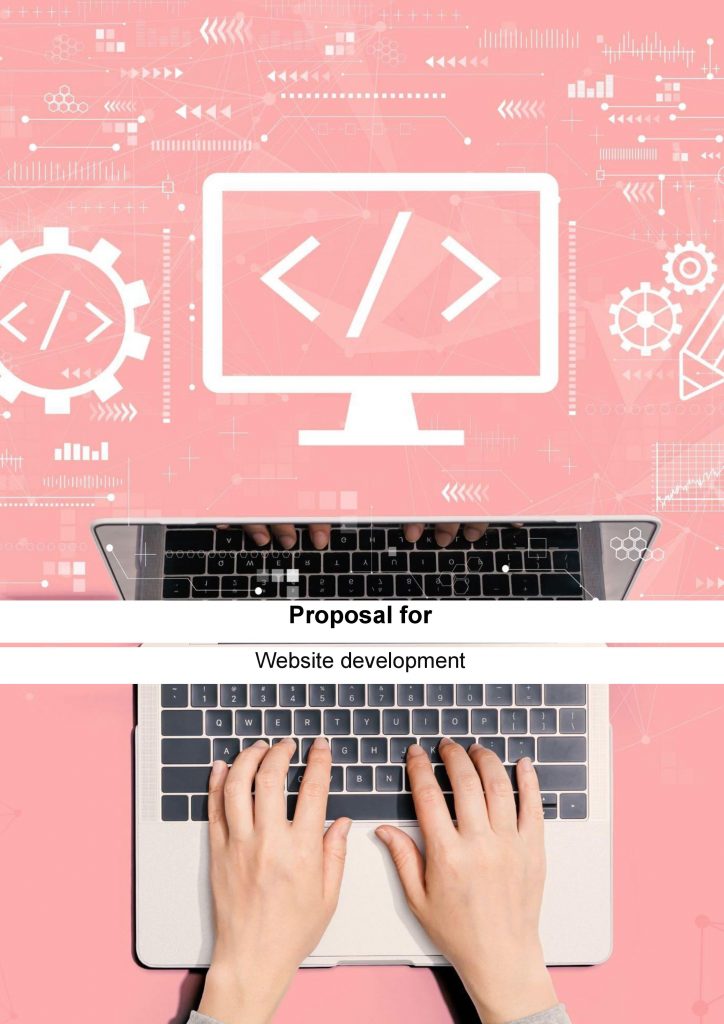
Proposal for Website redesign 01


Are you searching for a responsive template to highlight your web design services that are visually appealing but clutter-free?

Look no further, you can’t go wrong with this slick, stunning website design proposal template from RFPLY. The proposal template not only delivers a simple aesthetic experience, but it also has seven organized sections that can be used to show potential customers how you can best satisfy their demands. The sections include a case study page, a page about our processes, a page about timelines, a page about investments,  and a page about terms and conditions

This gorgeous website proposal template does the job and much more. The powerful, self-assured design,  uses dark primary colors, which will give your business a contemporary, appealing, and expert appearance.

eCommerce Website Proposal Template

An e-commerce website proposal template offered by RFPLY.COM can be a great way to streamline the process of creating a proposal for an online store. By using this template, you can ensure that your proposal is well-organized and has every component needed to construct a strong web design proposal for an online store that will convince potential customers to always sign your proposal.

The template will help you save time by providing a structure for your proposal and pre-populating some of the content. This will be particularly helpful if you are not experienced in writing proposals or if you are creating a proposal for the first time. In addition, it is one of the most comprehensive and well-organized proposals that will need minimal editing.

UI UX Design Proposal Template

This UI UX design proposal template focuses on your specific approach to managing UX design projects to their successful completion and has a brief and thorough format that is easy to scan and understand. The free template outlines pages for a cover letter, description of the job, project schedule, estimate, and terms and conditions. It also gives room for highlighting the background and expertise of the organization.

In short, this UI UX design proposal template will be a great way to streamline your workflow and ensure that your proposals are consistent and professional.

Graphic Design Proposal Template

This graphic design proposal template can help you save a lot of time and hassle when creating proposals for your graphic design clients. Instead of starting from scratch each time, you can simply fill in the blanks with your client’s information and project details.

Below are three reasons why you should think of using this graphic design proposal template.

  • The template will ensure that all necessary information is included.
  • When you use this template, you can be sure that you haven’t forgotten to include any important details in your proposal. All the key points that should be covered are likely already listed in the template, which takes the guesswork out of preparing your proposal.
  • The template will make it easy to compare proposals from different designers.

Google Adwords Proposal Template

As the internet becomes more competitive, it is important for website owners to utilize all available tools to increase their visibility. Google AdWords is one of the tools that can be used to create ads that appear on Google’s search engine results pages. AdWords can be an effective way to drive traffic to a website and generate leads. Therefore, if your website agency provides Adwords services in addition to other web design services, you will find this Google Adwords proposal template very useful when preparing an estimate.

By using this pre-made template, you can quickly create an effective ad campaign that targets your specific audience. It is definitely pricey to hire someone to design your advertising plan. With the help of this template, you can complete it yourself at a much lower cost.

SEO Proposal Template

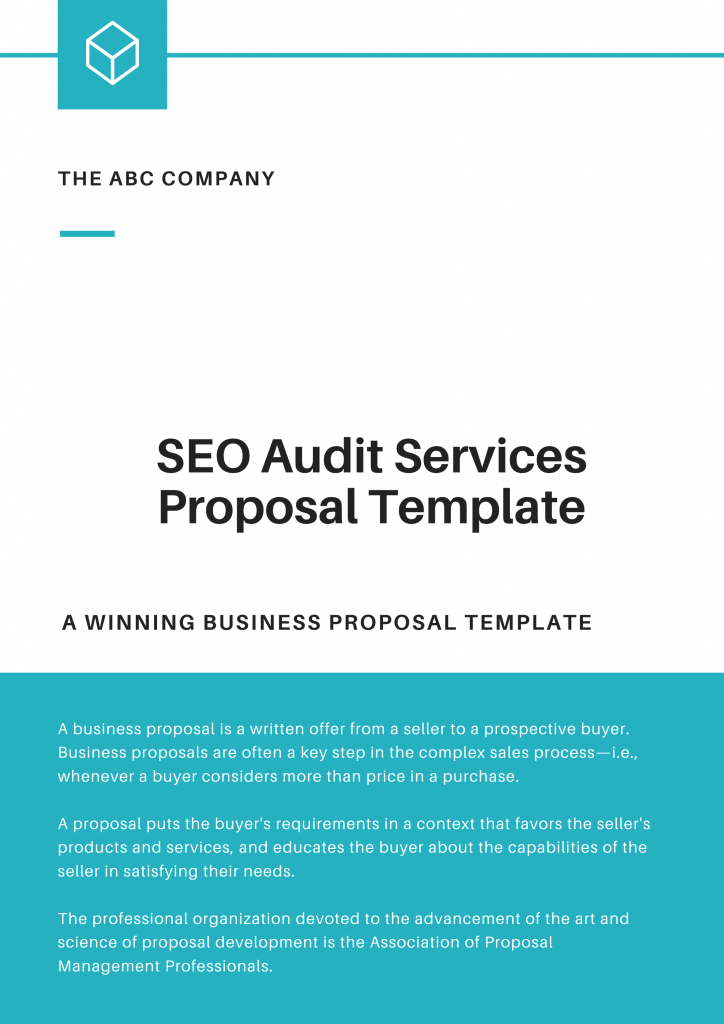
SEO Audit Services Proposal Template


This SEO proposal template from RFPLY.COM can be used by web services agencies when soliciting new clients. The template can help to ensure that the firm provides potential clients with the necessary information about its services and fees. Additionally, the template can help the firm to stand out from its competitors.

By using this template, you can avoid having to create a custom proposal for each new client. This can save significant time and resources. Additionally, the client will appreciate receiving a well-organized and professional proposal.

So in case you are wondering what makes a good SEO proposal, there’s no need to start from scratch. RFPLY has done all the nitty-gritty tasks for you. All you need to do is simply add your company-specific details under each section provided in the proposal template and you are on the go for sealing deals.

Conclusion

In conclusion, if you’re looking to up your web services proposal game, these six templates are a great place to start. They’re designed to help you close more deals and reach your sales goals, so what are you waiting for? Get started today!